What is it?
|
|
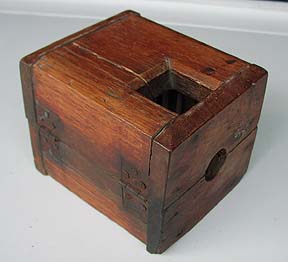
Top view
We bought this at an auction in the mountains of Virginia around 1970. It was locally made from oak or chestnut (maybe chestnut oak). Note handmade iron hinges. |
|
|
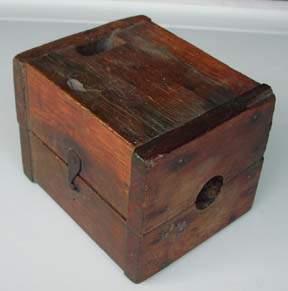
Bottom view
Note handmade latch and wood screw keeper. Obviously a part is missing that fits in the round hole in the front. |
|
|
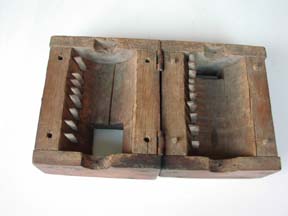
Inside view
Yes, those are broken straight razors with their tangs driven into the wood. Note the wooden indexing pegs. The semi circular cut outs accommodated leather bushings for a wooden shaft turned by an outboard crank to turn A tapered auger studded with square cut key stock or blades.
Scroll down for answer |
This is a primitive sausage grinder probably made and used in the mountains of Virginia around 200 years ago. The narrow-bladed folding straight razor appeared around 1680. I also have a factory made cast iron version from about 1900 which is complete and functional. They are often seen in antique shops as "ice crushers". I haven't tried to use either of them though I assume the grind was fairly coarse. It is interesting that the old timers around here valued and sought out coarse ground sausage saying that normally ground was mealy. We had to be careful when mixing seasoning in fresh ground sausage by hand not to over mix it and make it mealy. No water or binders were used in those days that I know of.
Here is an article by Alice Ross, food historian:
http://aross.binome.com/journal/articles.html
An excerpt:
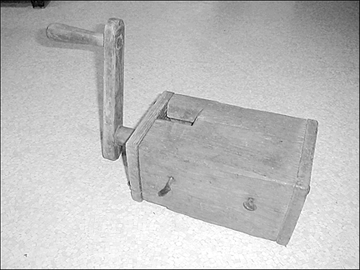
"The earliest nineteenth-century geared grinders were made largely of wood. Bill Holt, proprietor of the Curiosity Shop in Elkton, Virginia, has seen many. He suggests that these hand-made box grinders were carried south through the Shenendoah Valley by Pennsylvania German re-settlers. In these marvelous contraptions a long wooden handle turned a central wooden core-screw. Both the lining of the box and its core were carefully imbedded with interfacing rows of sharp blades. As you turn the handle, the meat is eased through the box, all the while being cut into increasingly small pieces and finally dropped out at the far end. These grinders come apart like Chinese puzzles for cleaning and sharpening. I have seen several variants of this design—they have a remarkably similar but curiously hand-made look."
Back to the Smokehouse